A true story first.
Last week a short video landed in our group chat: a woman tested HPV-positive after a hotel stay, camera pointed at the bath towel and the toilet seat, caption: "never touching anything in a hotel again."
The chat exploded.
"Do I need to pack a three-piece kit for every business trip now?"
"Are pools and hot springs high risk too?"
I quietly typed three words: not, really.
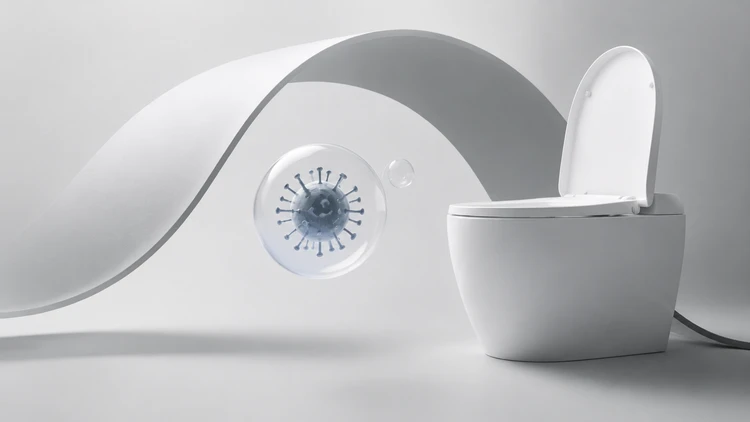
HPV does badly once it leaves the body.
It is a "naked DNA virus" with no envelope to protect it. Dryness, ultraviolet light, ordinary laundry powder — any one of them dismantles it on the spot.
Lab data shows HPV is fragile outside the body and does not tolerate drying. Once away from a host it loses infectivity quickly; on a dry toilet seat the virus usually survives only minutes to a few hours, and its activity drops sharply.
So for a towel, a toilet seat or pool water to ambush you, all of these would have to be true at once:
- It was heavily contaminated by a large viral load a second ago
- A second later it reached your mucosa and a micro-abrasion
- Your immune system happened to be dozing at that exact moment
The odds are low enough to ignore.
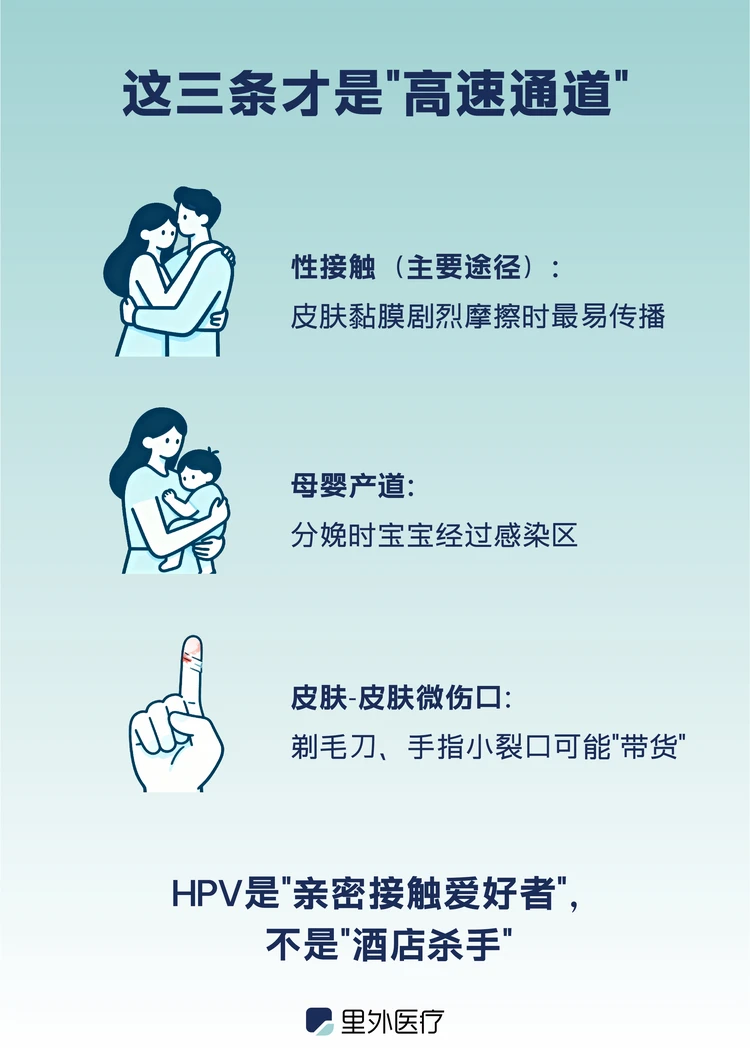
Questions that come up again and again, answered once:
Public pool? Water, chlorine and warmth — the virus is diluted into oblivion.
Sauna? Damp, hot and ventilated — HPV does not last a song.
Sharing a razor? If there is no blood and two hours have passed, risk is close to zero. If you still worry, wipe it with an alcohol pad for 30 seconds.
Touching the bedsheet then going to the toilet? The stratum corneum of your skin is a natural firewall, and the viral dose is too low anyway. If you really want certainty: running water and soap for 20 seconds and you're done.
In one sentence
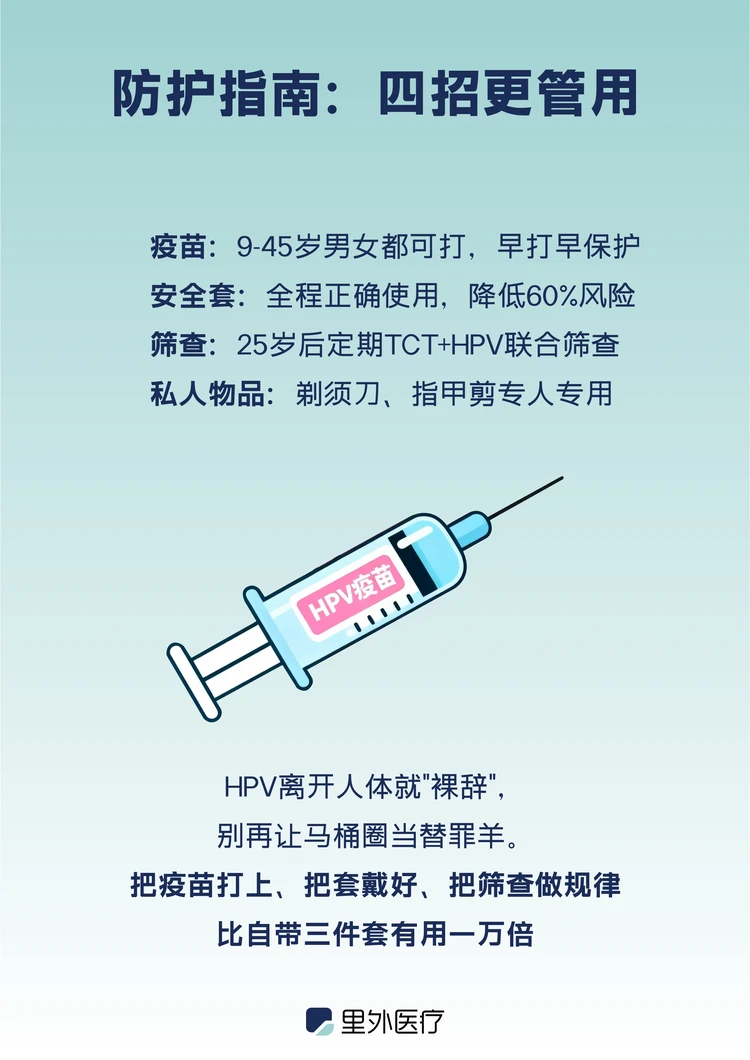
HPV resigns the moment it leaves the body. Stop blaming the toilet seat.
Vaccinate, use condoms, screen regularly — a hundred times more useful than bringing your own bedsheets.
Pass it on, so your friends and family can stay in a hotel without the fear.