1. Know where the boundary is
Safe contact: sharing meals, shaking hands, using the same toilet — everyday contact carries very low risk. HPV survives poorly in water and is inactivated by routine disinfection.
Risky contact: mainly sexual contact; direct skin-to-mucosa contact; indirect contact with contaminated items such as a shared, unwashed towel or razor.
2. The core protective measures
- Personal items stay personal, and get disinfected properly
Wash towels separately, dry them thoroughly in the sun, or soak them in chlorine-based disinfectant for thirty minutes.
Wash underwear by hand on its own, then dry it after hot water or disinfectant. Avoid mixing it into a machine wash.
Do not share a bathtub between children and adults; if you must share, wipe it down with chlorine-based disinfectant first.
Razors must be personal. Skin nicks are exactly how the virus travels.
- Hand hygiene is the key
After handling warts or applying medication, and before touching family members, wash with soap and running water for twenty seconds, or use alcohol sanitiser.
- Manage the bathroom to cut residual contamination
While warts are active, close the lid before flushing; wipe the seat with chlorine-based disinfectant wipes; do not share towels for drying intimate areas.
3. What each family member needs to focus on
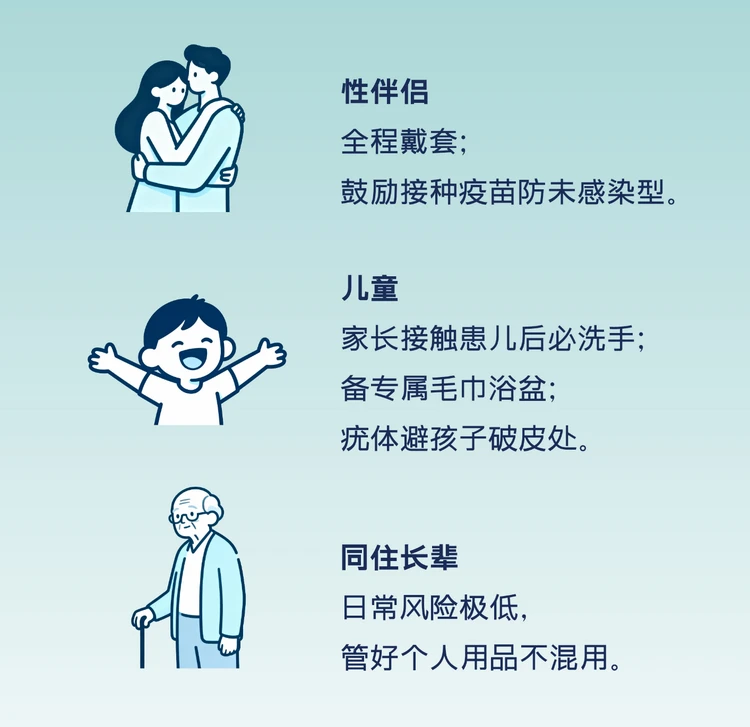
In short: HPV transmission within a household is preventable and controllable — the key is blocking contaminated items and direct contact. Most infections are transient and about 90% clear on their own. Regular follow-up plus sensible precautions is enough to protect the people you live with.